We investigate how microbiomes, pathogens, and antimicrobial-resistant microbes interact within animal host populations, and how these interactions influence animal health, food safety, and public health.
Our work integrates molecular epidemiology, microbiome science and pathogen genomics, and computational/bioinformatics approaches to address applied One Health questions in livestock and food production systems.
Research Focus Areas
Applied Genomic Epidemiology
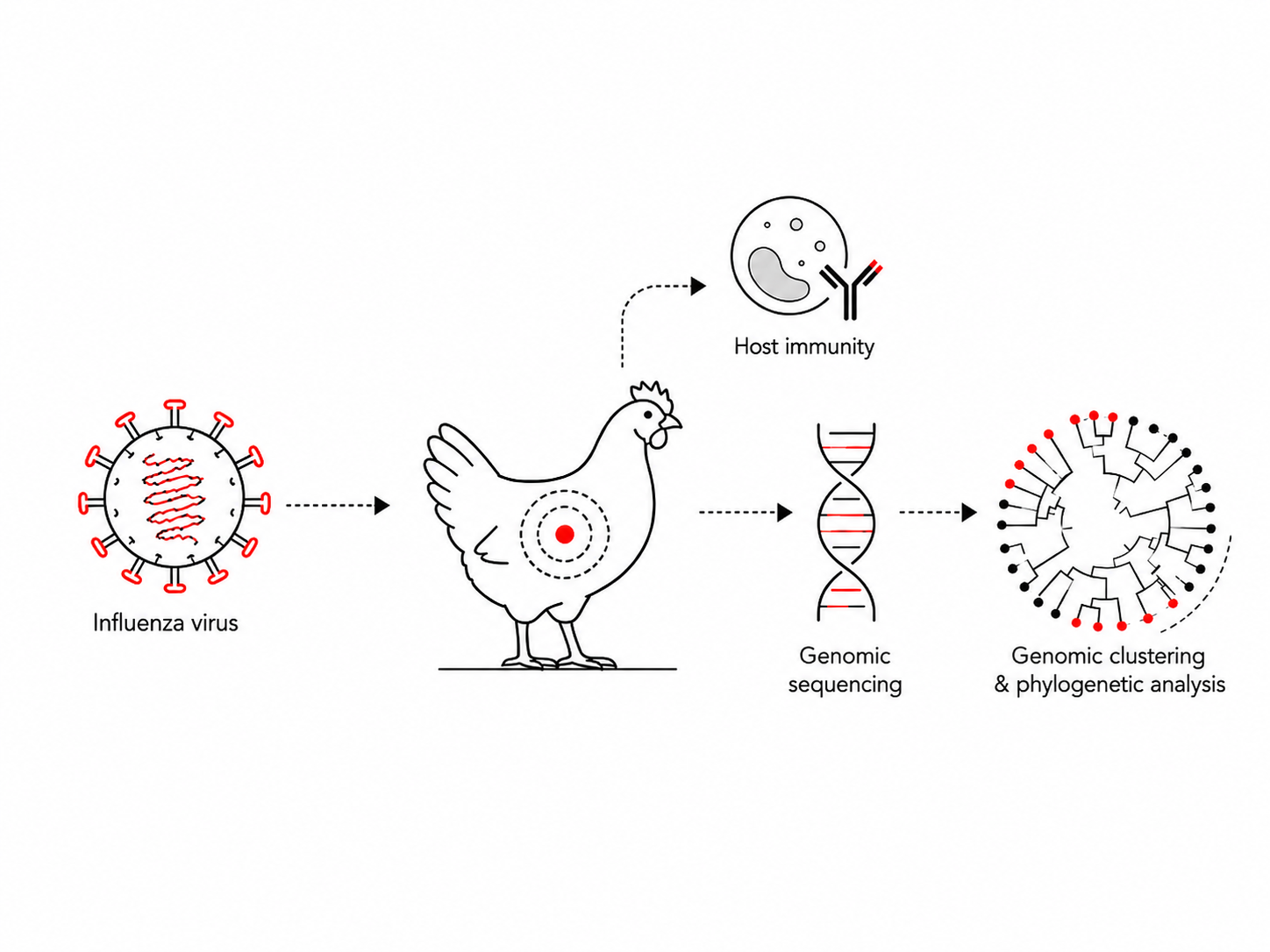
The spread of viral and bacterial pathogens in animal populations and the environment poses significant risks to both animal and public health. This research program explores how host–microbe–pathogen interactions shape pathogen diversity, evolution, and disease risk. We study bacterial and viral pathogens of importance to animal agriculture and public health.
Current research includes:
- Molecular epidemiology and the role of host immunity in viral pathogen evolution, including influenza
- Respiratory microbiome dynamics and Streptococcus suis disease in swine, with a focus on strain-level diversity using integrated epidemiologic and genomic approaches
Microbiomes, Resistomes, and Food Safety
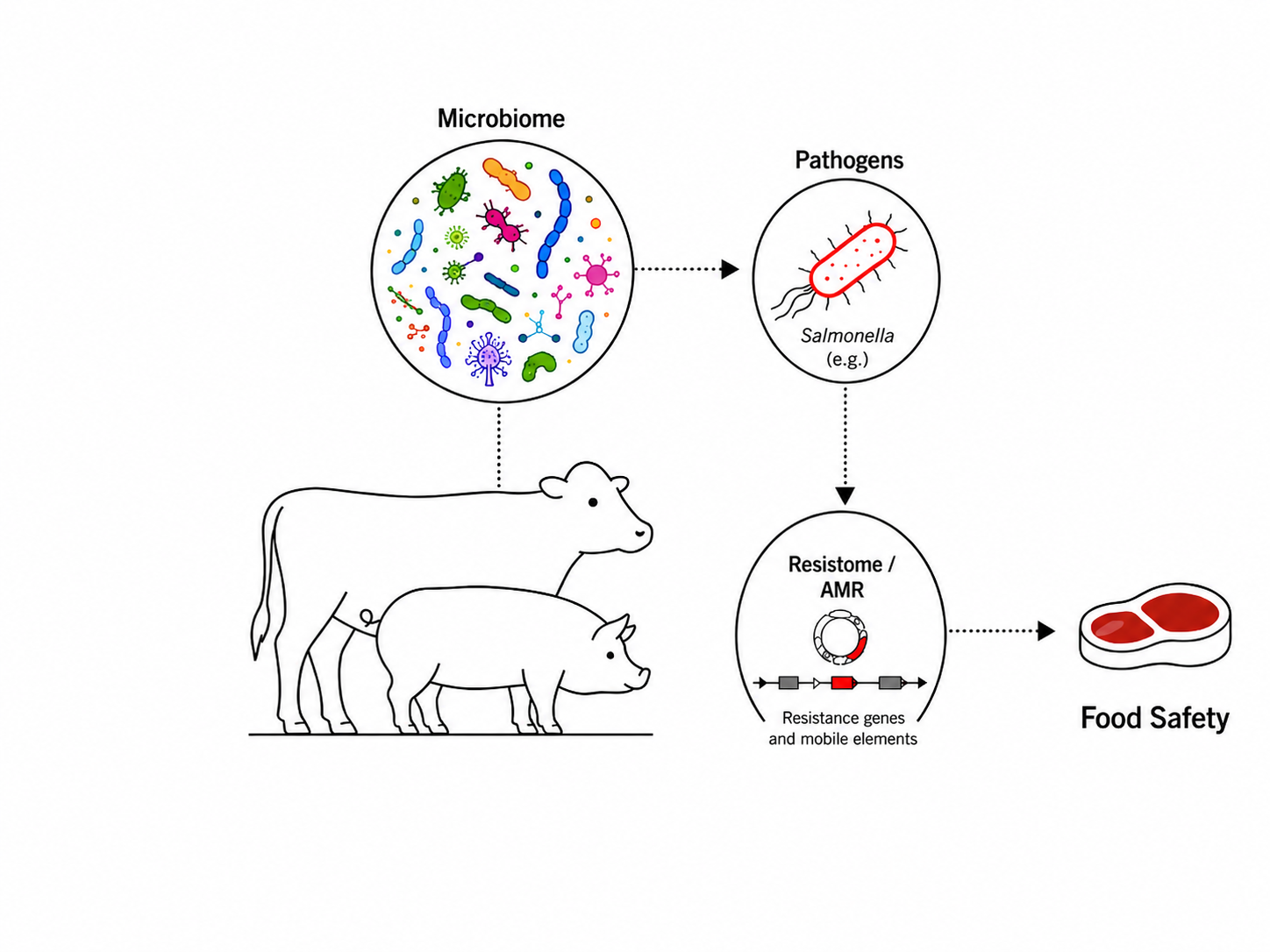
The emergence and spread of antimicrobial resistance (AMR), together with the transmission of microbial pathogens from animals to humans, is a major One Health challenge. We investigate how the microbiome, including alternative dietary strategies, can be leveraged to reduce the persistence of AMR within animal microbiomes.
Current projects include:
- Liver abscess microbiome and foodborne pathogen ecology in cattle
- Phenotypic, genotypic, and fitness characterization of multidrug-resistant Salmonella enterica
Computational/Bioinformatics
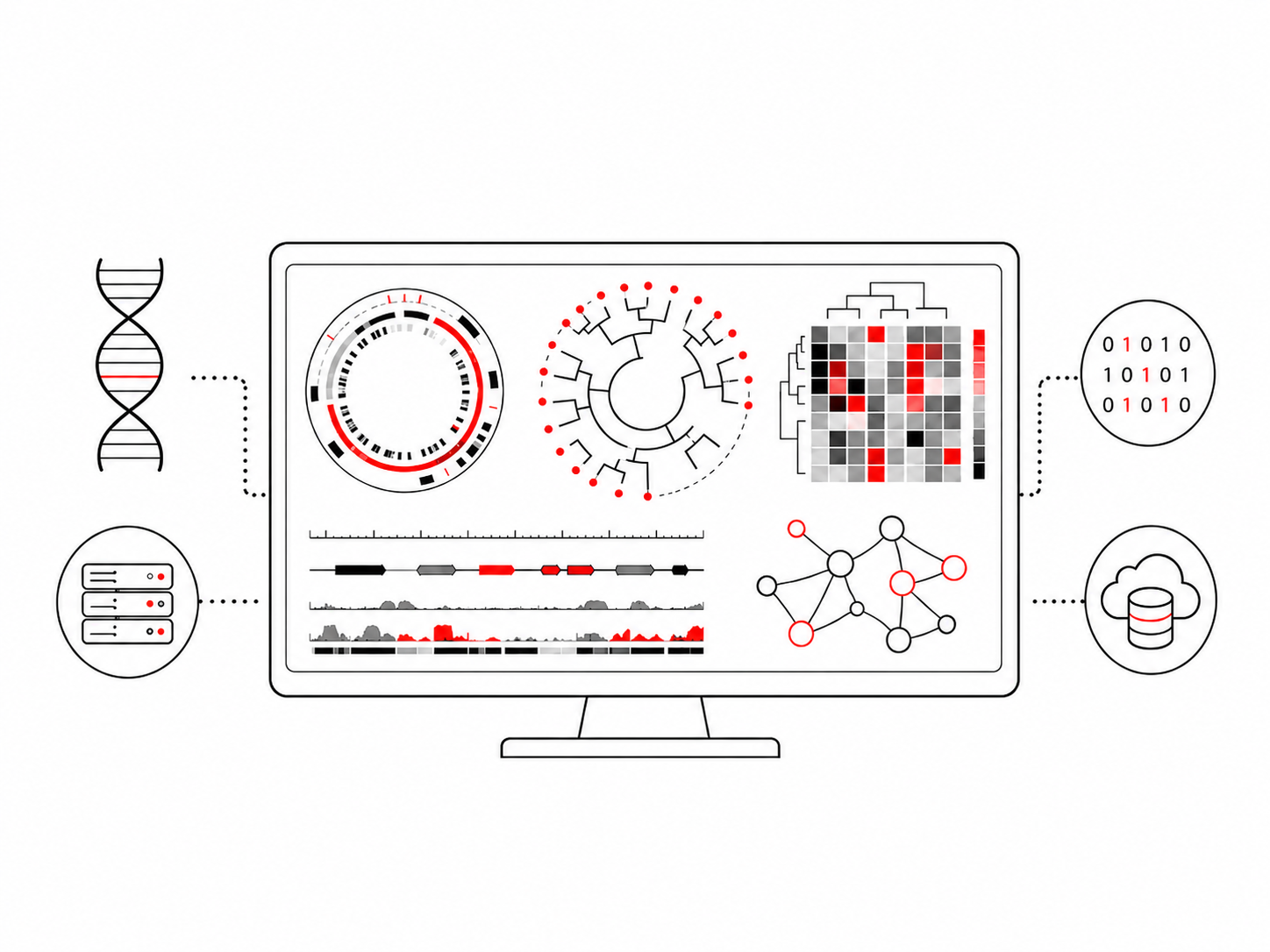
We apply molecular sequencing and improved computational/quantitative methods to analyze complex microbiome, resistome, and pathogen genome datasets. Our goal is to translate high-dimensional sequencing data into practical insights for infectious disease control, AMR mitigation, and food safety.
Current projects include:
- Development of an improved computational workflow for rapid AMR risk assessment in food production microbiomes
For recent work from the lab, see our publications and lab news.